2026.5.1-2026.6.21
LONG MUSEUM WEST BUND
| Curator | Ye Wenxiu |
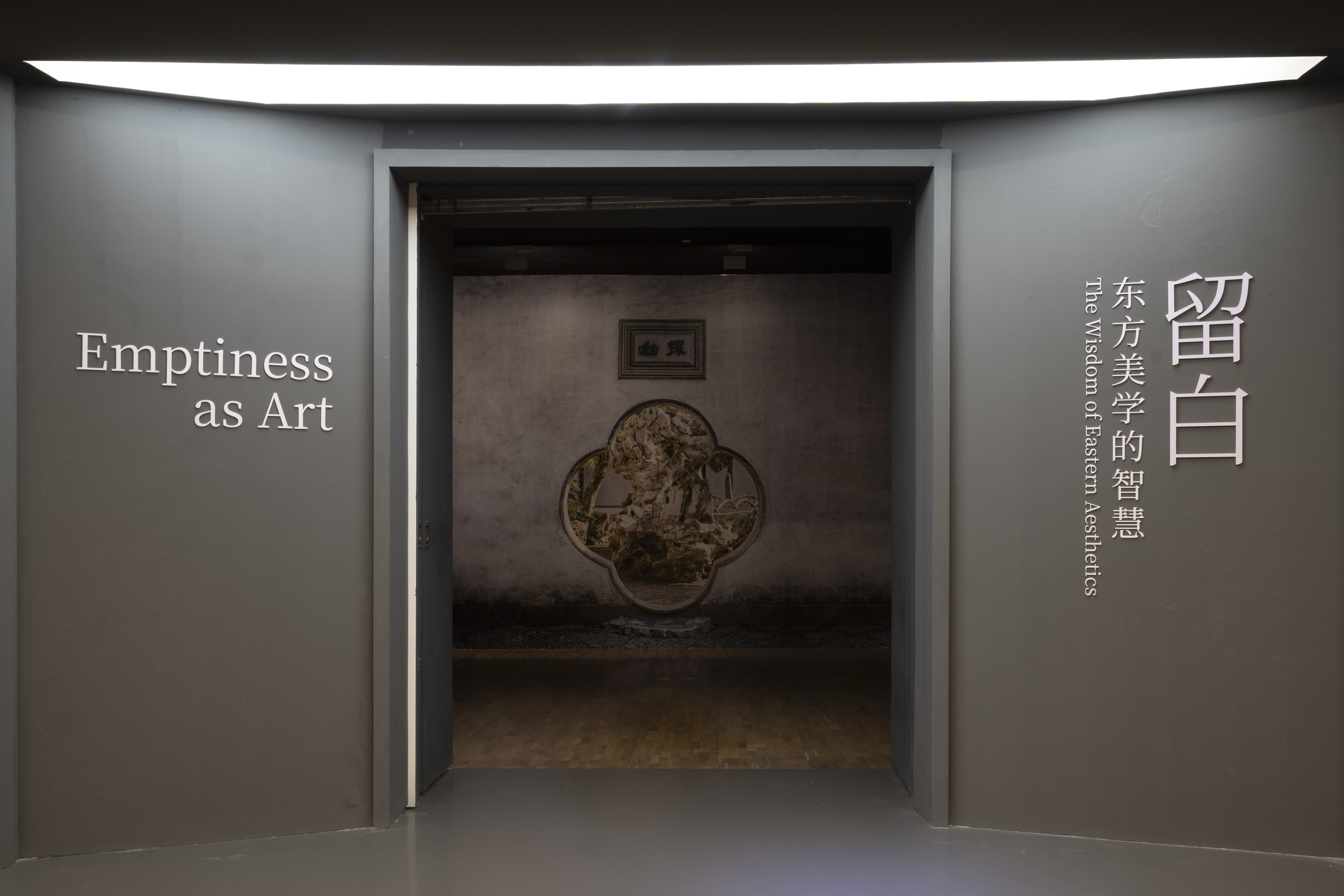
Liubai, or the art of leaving space, is deeply rooted in the cultural sensibility of the East and endures as a vital artistic intelligence across time. From painting and calligraphy to the crafting of objects and the design of gardens, it has long functioned as a distinctive visual language, embodying a singular aesthetic pursuit. While China, Japan, and Korea share a common cultural inheritance, their respective interpretations of emptiness reveal nuanced differences: in China, it channels the flow of qi and an expansive cosmological vision; in Japan, it evokes a sense of subtle profundity and contemplative stillness; in Korea, it expresses refined simplicity and a gentle, understated warmth.
Within the Chinese tradition in particular, liubai carries profound philosophical implications. It articulates the idea of “rendering the real through the void” and “embracing the world within emptiness,” offering a key to understanding classical Chinese aesthetics. Far from being incidental blankness or an unfinished absence, it is an intentional and generative space—one that gathers the rhythms of nature and the contemplative spirit of the literati.
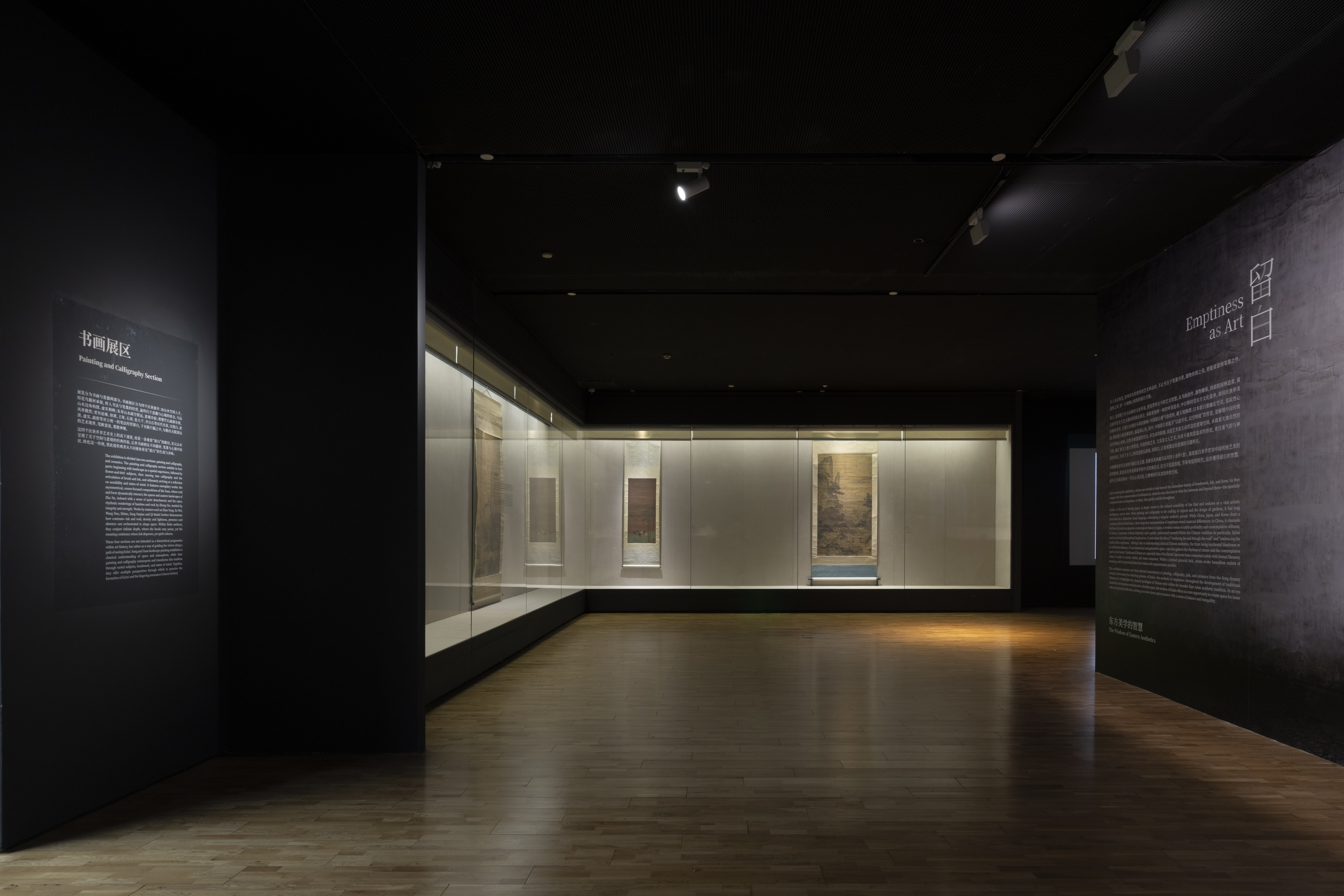
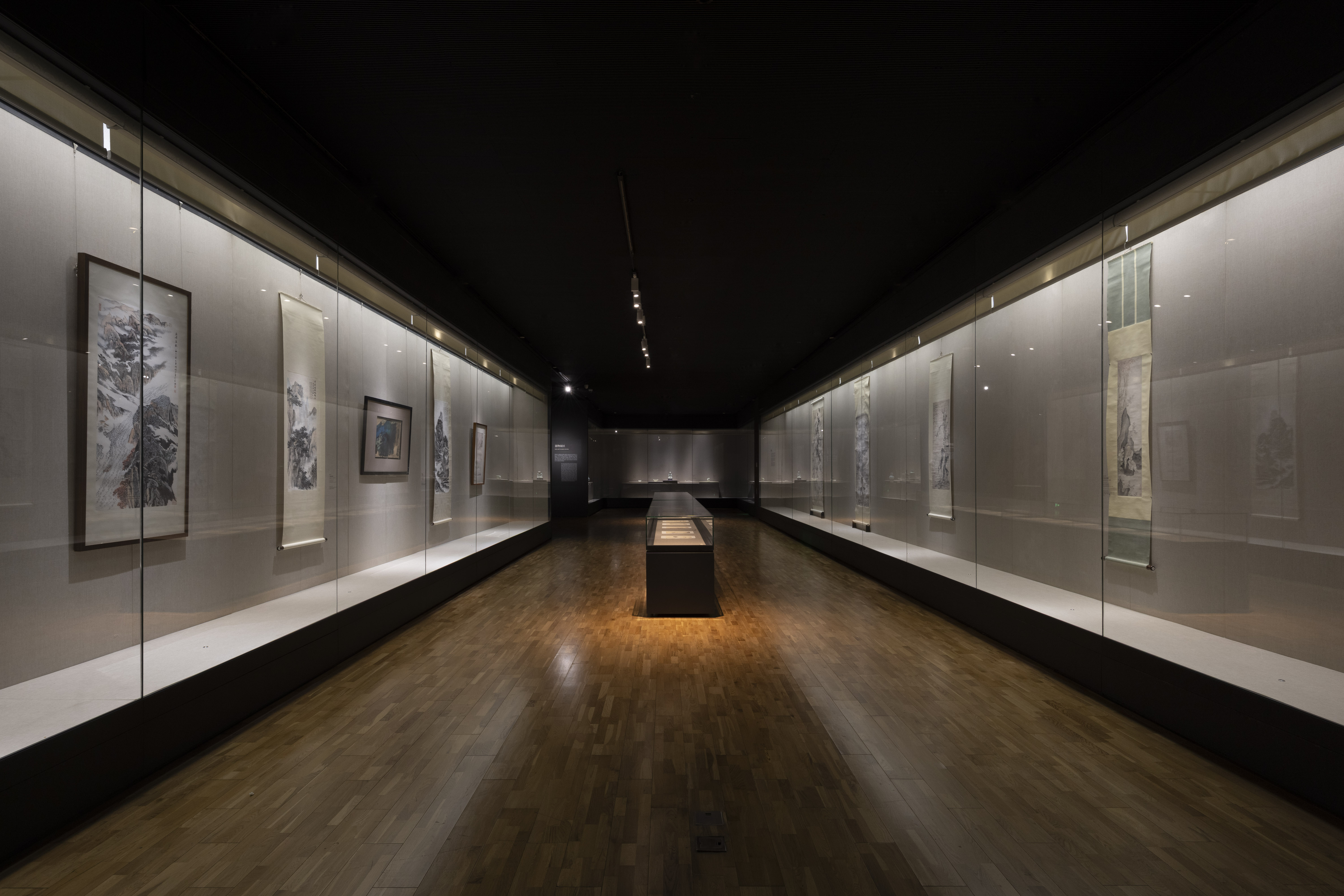
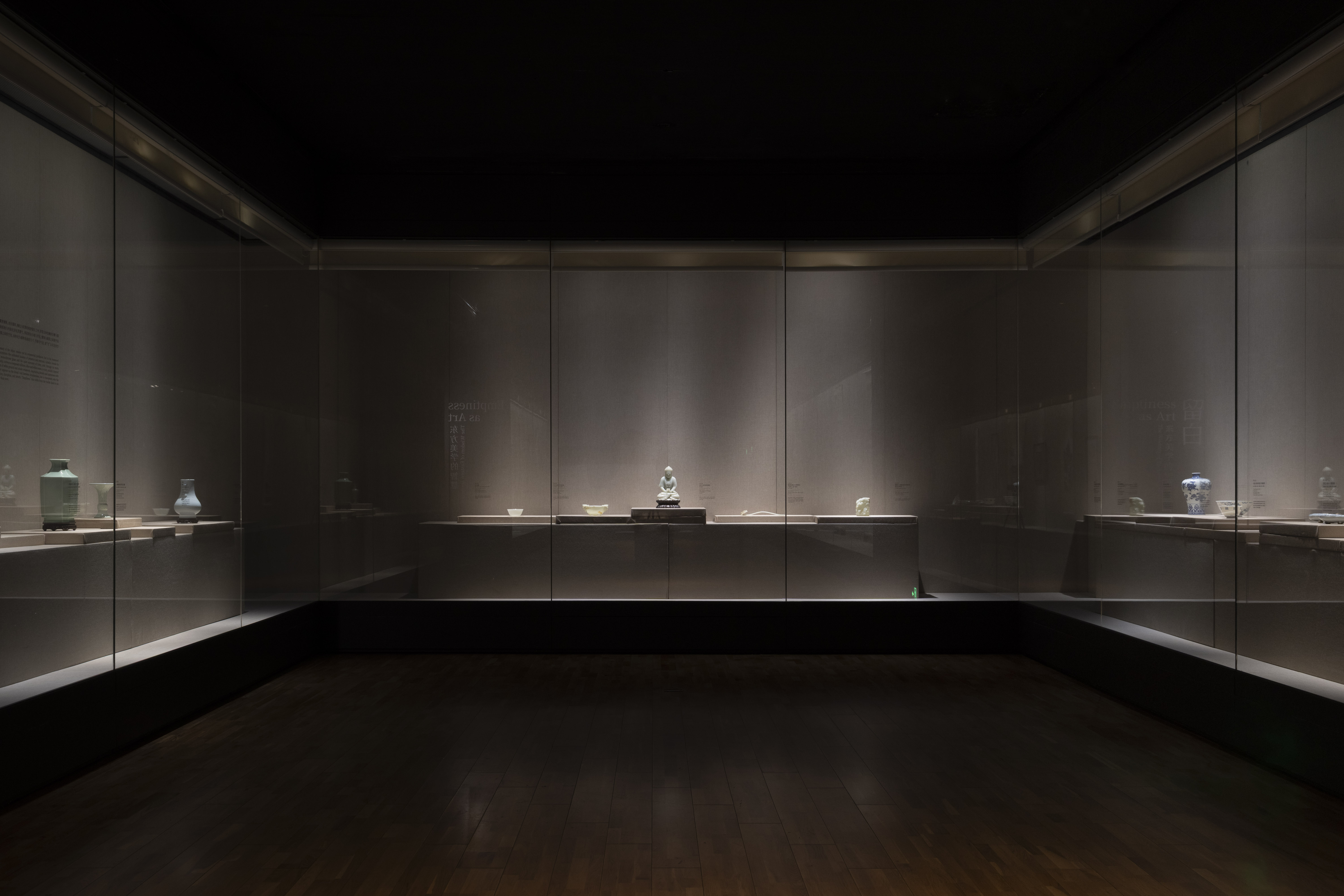
This exhibition brings together a carefully curated selection of paintings, calligraphy, jades, and ceramics from the Song dynasty onward, totaling more than 40 pieces (sets),tracing the enduring presence of liubai across the history of Chinese art and highlighting its role within a broader East Asian aesthetic framework. The exhibition is divided into two sections: painting and calligraphy, and ceramics. The painting and calligraphy section unfolds in four parts: beginning with landscape as a spatial experience, followed by flower-and-bird subjects, then moving into calligraphy and the articulation of brush and ink, and ultimately arriving at a reflection on sensibility and states of mind. These four sections are not intended as a hierarchical progression within art history, but rather as a way of guiding the viewer along a path of seeing liubai. Song and Yuan landscape painting establishes a classical understanding of space and atmosphere, while later painting and calligraphy reinterprets and transforms this tradition through varied subjects, brushwork, and states of mind. Together, they offer multiple perspectives through which to perceive the formation of liubai and the lingering resonance it leaves behind.
Painting and Calligraphy Section
I. Spatial Structure
In this section, viewers first encounter the expressive potential of liubai hrough spatial constructions shaped by landscape and human presence. In Lofty Scholar with a Crane, Ma Yuan employs an asymmetrical, off-centered composition that allows emptiness to unfold naturally across the pictorial field. The anonymous Spring Travel in the Serene Valley builds a sense of depth through the measured recession of foreground and background, evoking a quiet, secluded expanse. Meanwhile, Zhao Yong’s Horse Riding by the Riverside and Zhou Chen’s Viewing Tidewater orchestrate figures, riverbanks, and the distant movement of water and tides to extend the spatial imagination beyond the limits of the frame. Here, liubai is not merely the absence of depiction; it becomes a generative force—structuring space, guiding the viewer’s gaze, and giving rise to an atmosphere that resonates beyond what is seen.
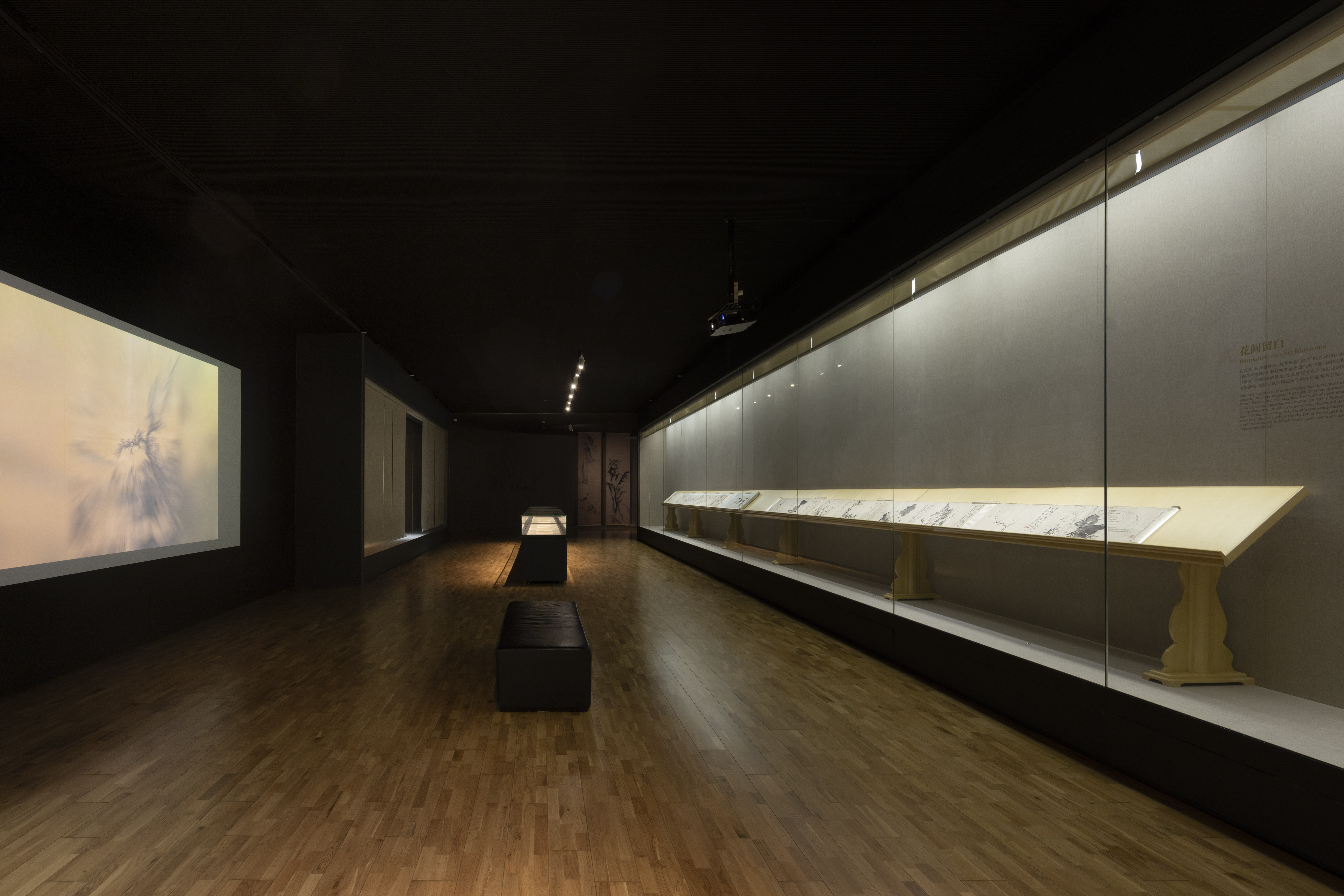
II. Blankness Among Blossoms
Within the genres of bird-and-flower and floral painting, the perception of liubai shifts from expansive landscape space to the more nuanced interplay between branches, birds, and the tonal movement of ink. In Tang Shuya’s Plum Blossom and Two Magpies, intervals of open space are carefully retained amid dense clusters of branches, allowing the composition to breathe. Xu Wei’s Flowers in Ink renders blossoms with unrestrained brushwork, where blankness unfolds in concert with the modulation of ink density and the movement of the brush. In Chen Kuo’s Various Flowers in Ink, a subtle resonance emerges between disciplined form and expressive spontaneity, as areas of emptiness mediate the rhythm of leaves, petals, and ink. Meanwhile, Chen Jiru’s Plum Blossoms achieves a refined austerity, in which blank space becomes the ground upon which the quiet vitality of plum blossoms lingers and extends.
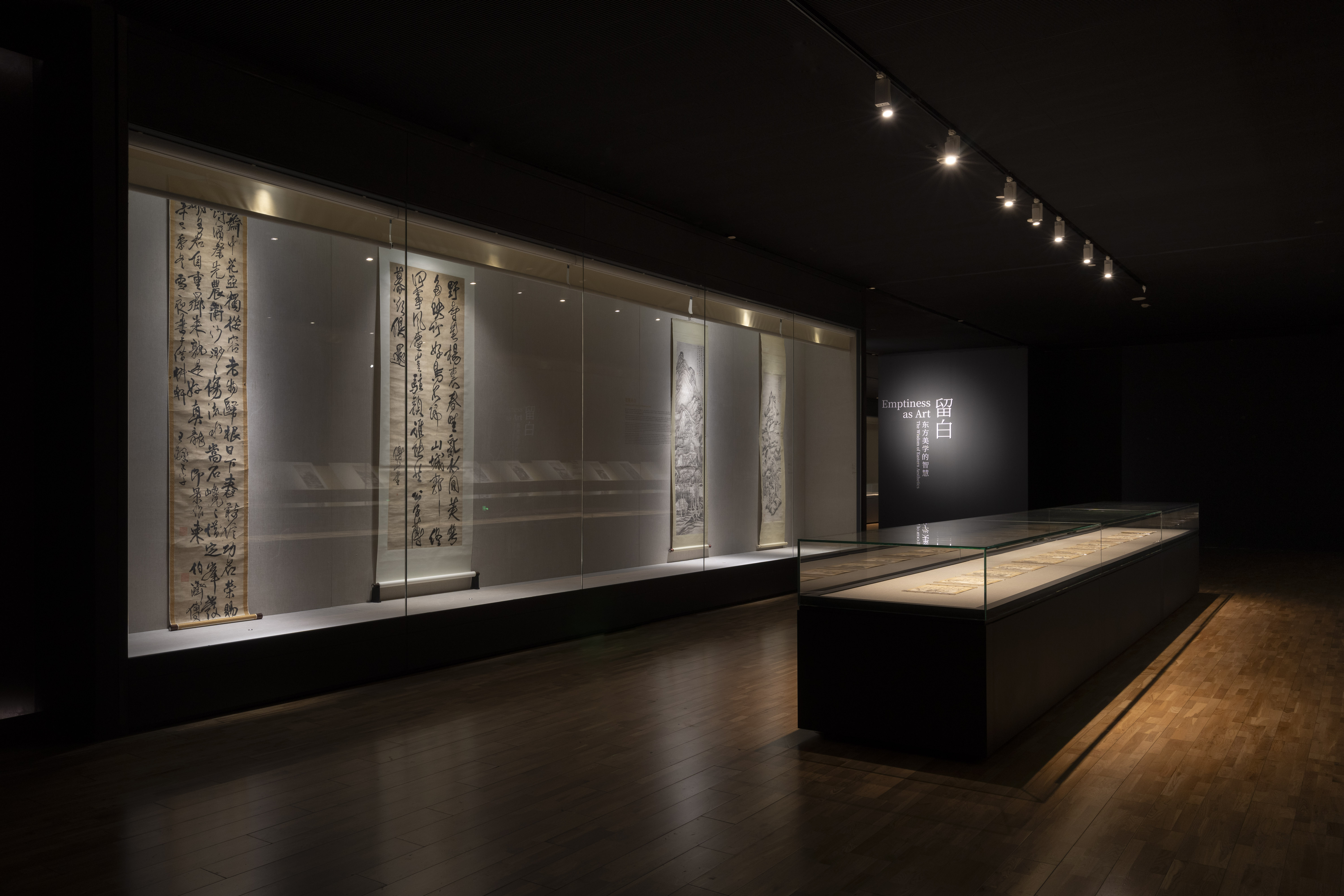
III. Opening and Closure in Brush and Ink
In this section, liubai moves beyond spatial construction and subject matter, entering the very language of brush and ink. In Wang Duo’s Calligraphy in Running Script and Fu Shan’s Du Fu's Poem in Cursive Script, the spacing between characters and lines, together with the continuity of qi in the brushwork, creates a dynamic tension in which blankness becomes integral to rhythm and force. In Gong Xian’s Lofty Retreat, passages of dense, layered ink retain vital apertures, allowing the composition to breathe and preventing visual stagnation. Zhu Da’s Dwelling in the Mountains, by contrast, employs an off-centered compositional weight and carefully articulated voids to evoke an atmosphere at once austere and charged with tension.
In Wang Yuanqi’s Album of Landscapes after Old Masters, the pursuit of antiquity unfolds through the disciplined orchestration of compositional structure and brushwork. Across the album, whether in densely layered peaks or expanses of open riverbanks, the interplay of solid and void, density and dispersion, contraction and release—among rocks, trees, clouds, water, and slopes—ensures the continuous circulation of pictorial energy. Meanwhile, Shitao’s Calligraphy and Landscapes integrates poetry, calligraphy, and painting. Within its lightly inked and subtly colored scenes, expanses of water, drifting clouds, distant mountains, and foreground passages are left open, allowing even small album leaves to convey a sense of breadth and movement. Here, liubai is no longer merely what is left unpainted, but the very space through which brush and ink breathe, circulate, and come into being.
IV. Realms of Resonance
At this stage, liubai extends beyond composition and brushwork, unfolding as temperament, inner disposition, and meaning that resides beyond the depicted image. In Zheng Xie’s Bamboo and Rock, sparse bamboo and resilient stone articulate a clarity of spirit marked by austere strength. Huang Shen’s Search for Plum in Snow leaves an emotional interval between the solitary traveler and the wintry landscape, allowing sentiment to remain suspended and unresolved. In Li Shan’s Wood and Rock, restraint within the depiction of gnarled wood and bamboo gives rise to a quiet tenacity, while Luo Ping’s Flowers and Monk situates a seated figure within an open, floral setting, leaving behind a lingering aftertone of contemplation. In each case, liubai transforms from pictorial absence into an index of character, mood, and cultivated presence. In the modern section, this sensibility is further rearticulated. Pu Ru’s Landscapes evokes spaciousness through a lucid and restrained pictorial field. Huang Binhong’s A Sage Contemplating beside the Stream retains currents of movement within densely layered ink. Zhang Daqian’s Riverside opens breadth through expansive washes of color and ink, while Lu Yanshao’s Canyon in Autumn unfolds a dynamic momentum through the alternation of constriction and release within the gorge landscape. In Wu Hufan’s Ancient Pines and a Mountain Stream, layered recession leads the eye toward a secluded depth, while Qi Baishi’s Herd displaces its expressive core beyond the image itself. Here, liubai is no longer confined to visible intervals within the composition. It emerges through the modulation of density and openness, the interplay of ink and color, the rhythm of opening and closure, and the suggestive force of what lies beyond the frame—forming a resonant field that continues to unfold in the viewer’s mind.
Ceramics Section
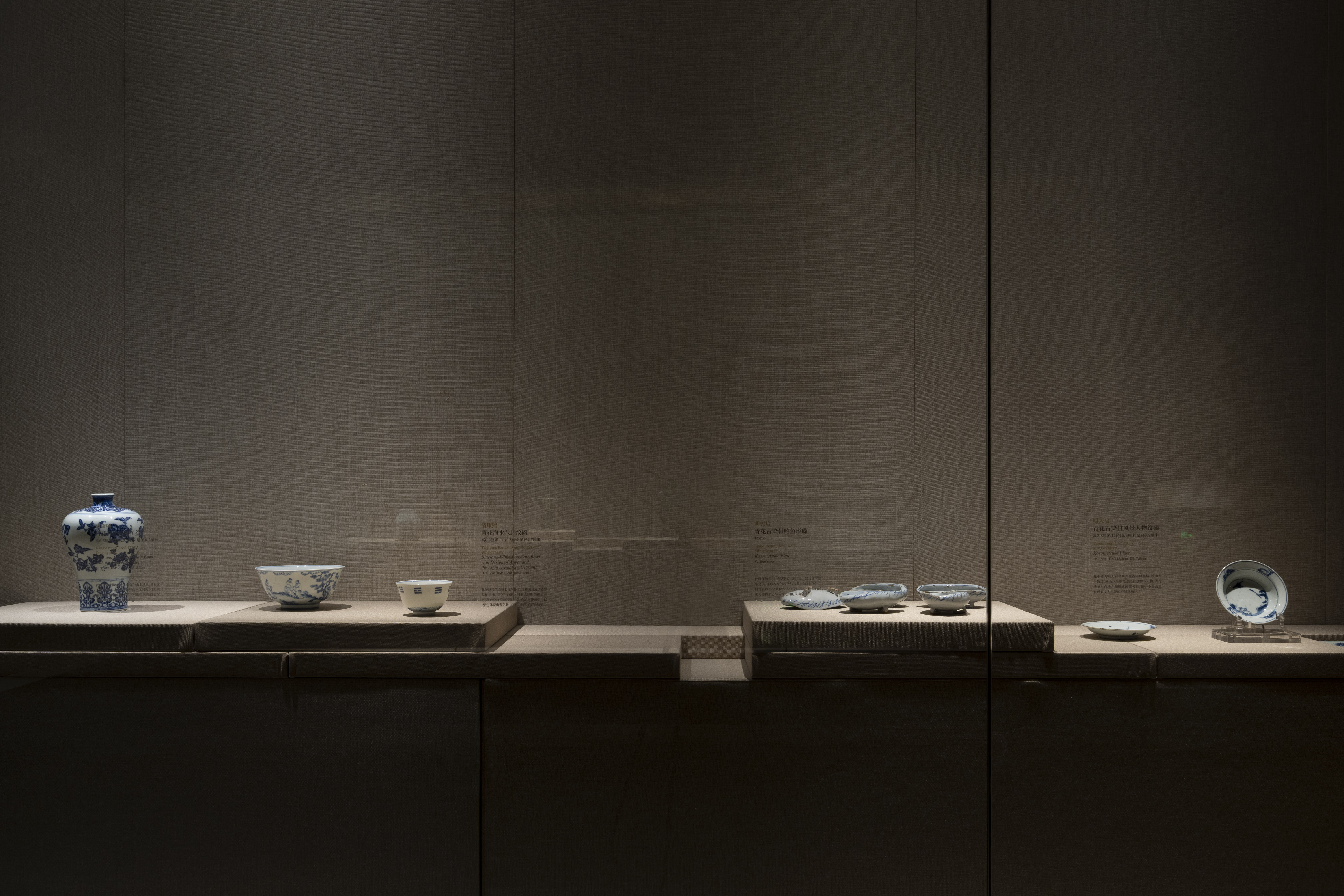
The section devoted to ceramics reveals that the principle of liubai extends equally into material culture. The understated elegance of jade, with its restrained luminosity, resonates with the Confucian ideal of the gentleman’s virtues. Its quiet purity finds an echo in the refined simplicity of celadon, whose subtle surfaces embody a sense of spacious calm. Blue-and-white ceramics flourished across the Yuan, Ming, and Qing dynasties, attaining its height during the Yongle and Xuande reigns of the Ming. During the Kangxi, Yongzheng, and Qianlong reigns of the Qing dynasty, a revival of antiquarian taste prevailed, and finely executed blue-and-white ceramics were produced in great number, distinguished by elegant decoration and auspicious motifs. By the late Ming, however, imperial kiln production had begun to decline, while private kilns increasingly focused on export wares. Among these were late Ming blue-and-white ceramics commissioned for the Japanese market—known as ko-sometsuke—created in response to the aesthetic preferences of Japanese tea practitioners. With their spare compositions and deliberately unrefined motifs, these works resonate closely with the sensibilities of the Japanese tea ceremony and stand as exemplary articulations of liubai within the exhibition.
Text/Ye Wenxiu